Staff and Associates
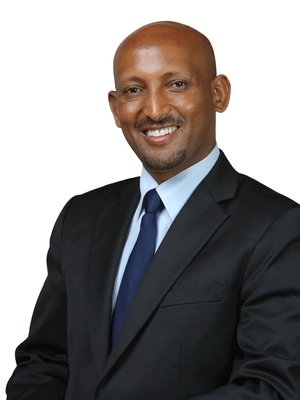
Prof. Dr Mehari Taddele Maru
Prof. Dr Mehari Taddele Maru serves as Chair of the Pan African Agenda Institute (PAAI) Board. He concurrently holds appointments as Academic Coordinator of the Young African Leadership Programme at the European University Institute (EUI), Part-time Professor at the Florence School of Transnational Governance and at the Migration Policy Centre, and Adjunct Professor at Johns Hopkins University SAIS-Europe and at LUISS Guido Carli University.
Prof. Maru's career spans more than twenty-five years, combining academic teaching and research with professional policy experience and leadership in intergovernmental negotiations and the management of multilateral governance bodies, think tanks, and universities across Africa, Europe, and the United States. Having been based in Addis Ababa, Ethiopia; Nairobi, Kenya; and Florence and Rome, Italy, he has extensive experience working with major regional and international organizations, including the African Union (AU), regional economic communities (RECs), the European Union (EU), and the United Nations (UN).
Prof. Maru's research and publications address transitional law and governance, human development, peace, geopolitics, and migration and mobility. His recent work includes contributions to the UNDP Regional Human Development Report, the 2022 World Migration Report, and the Henley Global Mobility Report, as well as research undertaken as a Fellow at the UN University Institute on Comparative Regional Integration Studies (UNU-CRIS) in Bruges, Belgium. His research on Africa's geopolitical agency examines how major global and Middle powers are increasingly engaged in a "race to the bottom" in their competition for influence on the continent, often prioritizing short-term strategic interests over long-term development, stability, and regional integration. With colleagues at the EUI Migration Policy Centre, he has also published research projects such as MEDAM.
Prof. Maru's articles have appeared in international and African academic journals, and his commentary and interviews have featured in leading global media outlets, including Foreign Policy, Project Syndicate, CNN, The New York Times, the Washington Post, the Financial Times, Reuters, the BBC, and Al Jazeera, among others. His areas of expertise include transitional governance, human development, peace and security, geopolitics, and migration policy.
Publications by Mehari Taddele Maru
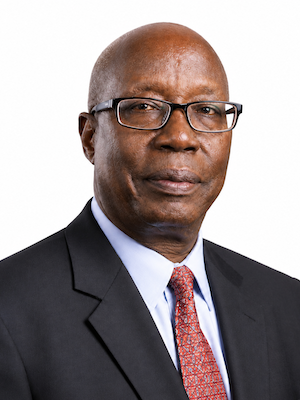
Ambassador Dr Francis Deng
Prof. Amb. Dr. Francis M. Deng is a member of the Editorial Board at the Pan African Agenda Institute (PAAI). He currently serves as South Sudan's Roving Ambassador, having previously been the country's first Permanent Representative to the United Nations. He also served for five years as the UN Secretary-General's Special Advisor on the Prevention of Genocide, at the level of Under-Secretary-General, and from 1992 to 2004 as the Secretary-General's Representative on Internally Displaced Persons.
Ambassador Deng's career spans more than four decades, combining diplomatic service, senior UN leadership, and academic research and writing across Sudan, South Sudan, and the United States. His UN career began as a Human Rights Officer in the Secretariat from 1967 to 1972, after which he was appointed Sudan's Ambassador to the Nordic Countries, and later Ambassador to Canada and the United States. He also served as Sudan's Minister of State for Foreign Affairs for five years. After leaving government service, he held a series of senior positions at leading think tanks and universities in the United States, including as a Distinguished Visiting Scholar at the John Kluge Center of the Library of Congress, a Wilhelm Fellow at the Center for International Studies at the Massachusetts Institute of Technology (MIT), a Senior Fellow at the U.S. Institute of Peace (2002–2003), and Director of the Sudan Peace Support Project based at the U.S. Institute of Peace (2006–2007). He also served as a Research Professor of International Politics, Law and Society at Johns Hopkins University's Paul H. Nitze School of Advanced International Studies.
Ambassador Deng's research and writing address law, conflict resolution, internal displacement, human rights, anthropology, folklore, history, and politics. He has authored and edited over thirty books across these fields, in addition to two novels exploring the crisis of national identity in Sudan. Dr Deng holds an LL.B (Honours) from the University of Khartoum, where he was subsequently appointed a member of the Law Faculty before being sent abroad for postgraduate study, and went on to earn an LL.M and a J.S.D. from Yale University Law School.
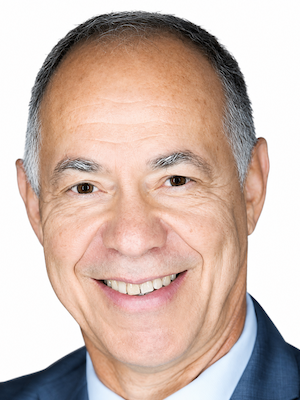
Dr Yahia H. Zoubir
Dr Yahia H. Zoubir is a member of the Editorial Board at the Pan African Agenda Institute (PAAI). He is a retired Professor of International Relations/Geopolitics and International Management, and served as a Nonresident Senior Fellow at the Middle East Council on Global Affairs in Doha, Qatar, from January 2020 to March 2026. He is a member of the Center of Middle Eastern Studies at Fudan University in Shanghai, China, and a regular Visiting Faculty member at universities across China, Europe, and the United States, as well as in Germany, Austria, India, South Korea, Malaysia, Indonesia, Senegal, Côte d'Ivoire, and the Middle East and North Africa.
Dr Zoubir's research focuses on the political economy and geopolitics of the Greater Maghreb and the Sahel, with particular emphasis on the foreign policies of the United States, China, and Russia. He has authored numerous books and peer-reviewed articles in leading academic journals, including the Journal of Contemporary China, Third World Quarterly, Mediterranean Politics, International Affairs, the Journal of North African Studies, the Middle East Journal, Arab Studies Quarterly, and Africa Today, among others, and has contributed chapters and reference entries to major scholarly works such as the Oxford Research Encyclopedia of Politics and the Oxford Encyclopedia of International Studies. In 2023, he edited The Routledge Handbook on China and the Middle East & North Africa. In addition to his academic work, Dr Zoubir advises governments and corporations on geopolitical and strategic issues.

Stephanie Oserwa Schandorf
Stephanie Oserwa Schandorf is a criminologist and applied policy researcher whose work spans governance, peace and security, and human development in Africa. She is Lecturer in Criminal Justice at University Centre St Helens of St Helens College in the United Kingdom, and is completing a PhD in Criminology at Liverpool Hope University with a fisheries governance focus. She holds an MSc in Defence and International Politics from the Ghana Armed Forces Command and Staff College.
Stephanie was Associate Director of the Gulf of Guinea Maritime Institute in Accra and, before that, Research Officer and Programmes Coordinator at CEMLAWS Africa. She served as Senior Non-Key Expert on the expert team that reviewed the ECOWAS Integrated Maritime Strategy Action Plan and co-drafted its successor and, as consultant to the UN Division for Ocean Affairs and the Law of the Sea, designed consultation instruments and delivered the Anglophone component of a capacity needs and priority assessment for Atlantic African states preparing to implement the BBNJ Agreement. She has also served as Organised Crime Expert on the formulation mission for the EU Transnational Organised Crime Project for West and Central Africa.
Her peer-reviewed work appears in African Security Review and Ocean and Society, alongside policy briefs for the Danish Institute for International Studies, a policy paper for the European University Institute's School of Transnational Governance, a co-authored book chapter on great power competition in the Atlantic, and institutional reports that have informed Ghanaian maritime governance. She has served as a peer reviewer for Frontiers in Marine Science. She has presented findings to the ECOWAS Interdepartmental Meeting in Abidjan, three plenaries of the G7++ Friends of the Gulf of Guinea, and UN and African Union expert forums.
Stephanie is an alumna of the European University Institute's Young African Leaders Programme and the Atlantic Dialogues Emerging Leaders Programme, served on the Strategy Group on Human Security in the Atlantic convened by the Johns Hopkins School of Advanced International Studies with the Transatlantic Leadership Network and the Atlantic Centre, and was Law of the Sea Interest Group Leader at the Africa Society of International Law.
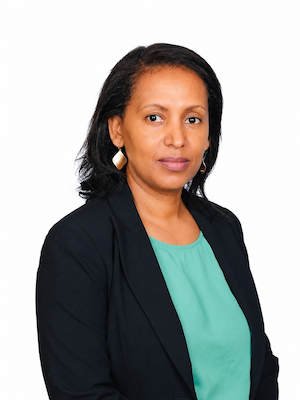
Dr Makda Maru
Dr Makda Maru is the Chief Executive Officer and Director for Research and Partnerships (part-time) at the Pan African Agenda Institute. She is also an Assistant Professor of Political Science at Delaware State University, where she teaches U.S. foreign policy, comparative government, and the politics of developing nations, and mentors students through internships and capstone projects. She earned a PhD in International Conflict Management from Kennesaw State University, an MA in Gender and Peacebuilding from the University for Peace in Costa Rica, and an LLB from Mekelle University in Ethiopia.
Dr Maru is an academic, researcher, and practitioner with more than fifteen years of experience in peace and security, gender, peacebuilding, and post-conflict reconstruction. She has worked as a researcher and trainer for the African Union, the Intergovernmental Authority on Development, the West Africa Network for Peacebuilding, and the Regional Center on Small Arms, leading multidisciplinary research on post-conflict reconstruction, migration, small arms and light weapons, disarmament, and project monitoring and evaluation, and contributing to policy development on migrant return, readmission, reintegration, and border governance. Prior to that, she served as a national peace adviser in Ethiopia and lectured in law. She has published work on women’s negotiation styles, the Ethiopia–Eritrea conflict, African Union early warning systems, and small arms disarmament.
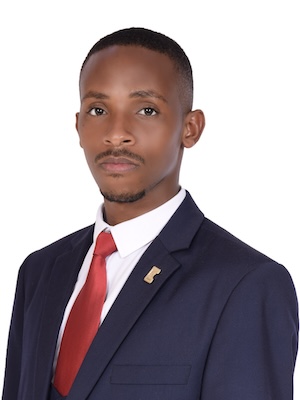
Mengo Sherastine
Mengo serves as Director of Communications at the Pan African Agenda Institute (PAAI), where he leads strategic communication initiatives that amplify the impact of the Institute's research and foster inclusive deliberation on bold, innovative solutions to Africa's current and future challenges.
With over a decade of experience in branding, strategic messaging, and digital communication, Mengo has worked with organizations including the African Union Commission and the Intergovernmental Authority on Development, as well as several think tanks, providing communications, research, documentation, and strategic support. He has also served as chief rapporteur for numerous high-level intergovernmental deliberations, producing high-quality reports that synthesize complex discussions into actionable policy recommendations.
His core strengths lie in designing communication frameworks that align with institutional goals, resonate with diverse audiences, and drive measurable impact. He combines evidence-based messaging with effective dissemination strategies across digital platforms, including website and social media management, and integrates dynamic technologies such as AI tools into applied policy research, deliberation, publication, and public engagement.
Mengo’s areas of expertise include strategic communications, branding, digital media management, and rapporteurship in policy and multilateral settings.

Esayas Hailemariam
Esayas serves as Director of Legal Research and Development at the Pan African Agenda Institute. Based in the San Francisco Bay Area, he also works in the private legal sector as Legal Operations Manager at Menna Law Group, a California-based immigration law firm, where he oversees organizational operations, supports legal strategy, and manages workflow across a broad client portfolio.
Esayas began his legal career in Ethiopia, where he was selected to participate in a prestigious national judicial reform initiative as a prospective judge shortly after graduating from law school, entering the judiciary at a critical moment in the country's efforts to modernize its legal institutions. He subsequently worked with several United States-based nonprofit public interest organizations focused on immigrant rights and international justice, serving as Director of Advocacy at the African Civil Rights Center, where he led initiatives addressing racial equity, transitional justice, and legal empowerment for African diaspora communities. He also provided supervised pro bono representation to asylum seekers and immigrants at East Bay Sanctuary Covenant, working on humanitarian petitions before US Citizenship and Immigration Services.
Esayas holds an LLM in International Law from the University of California, Berkeley Law, where he served as Vice President of the Student Organization for Advanced Legal Studies and worked as a student researcher on international commercial arbitration, deepening his focus on public law, accountability, and human rights.
As former chair of the North America chapter of the Global Society of Tigray Scholars and Professionals, Esayas conducted extensive legal research, led high-level discussions on regional security and justice, and directed advocacy missions engaging US lawmakers, United Nations officials, diplomats, and city leaders to raise awareness of atrocity crimes in Ethiopia. His areas of expertise include international and immigration law, human rights, transitional justice, and diaspora-led civic engagement.
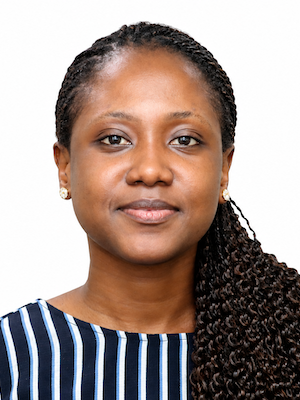
Emmanuella Aggrey
Emmanuella Aggrey is currently an Associate at the Pan-African Agenda Institute, where she co-authors publications in the form of research reports, executive briefs, policy papers, and op-eds. She helps PAAI engage policymakers, regional bodies, and civil society through briefings and dialogues as part of stakeholder engagement efforts. Her work splits between research, writing, and outreach, depending on where PAAI's priorities sit at any given time.
Her work at PAAI builds on her broader identity as a researcher in international relations with a geopolitical focus in Sub-Saharan Africa. Her research covers devolution, migration, democracy, gender, and peace and security, and aims to answer policy questions and contribute to existing knowledge on these themes in international relations and African development.
Emmanuella holds a Master of Arts in International Affairs from Johns Hopkins University School of Advanced International Studies (SAIS Europe), focused on peace and security, migration, international law, and constitutional studies. She wrote a thesis titled "The Responsibility to Protect (R2P) in Action," which examined the use of the R2P pillars in various peacekeeping case studies and analysed their validity alongside international human rights law and humanitarian law. Her paper "Hybrid Governance in Postcolonial Ghana" won the Charles Grove Haines Prize for explaining that postcolonial African states like Ghana have experienced democratic consolidation and peace to an extent due to the re-valuing of traditional leaders in modern democracy as non-political authorities at the local level.
She also earned a Bachelor of Arts in Political Science and Information Studies from the University of Ghana with First Class Honours. This combined major provided a foundation in research methods, statistical analysis, comparative studies, and international politics.
Prior to PAAI, Emmanuella worked with the United Nations Development Programme, as part of AI Trust and Safety and AI Hub for Sustainable Development core unit in New York. She co-authored an advisory report on government- and education-piloted use of OpenAI and Grammarly/Superhuman AI Products in Trinidad and Tobago. She was also involved in partnership-building for an AI ecosystem event in Bologna, bringing together 15 African innovators and 100+ Italian companies. Before that, she worked at the Food and Agriculture Organization in Botswana, contributing to research on food security and nutrition policy to develop national strategies as well as supporting community visibility efforts for projects.
The diversity in Emmanuella's work and interests is a testament to her curiosity and adaptability. The thread running through her work is how governance functions in states where formal institutions are weak, contested, or layered over informal systems of authority, and who holds real power within them once those systems overlap, including along lines of gender. It is a policy concern as much as an academic one, because the answer shapes how governments and development partners should be designing policy and delivering services.
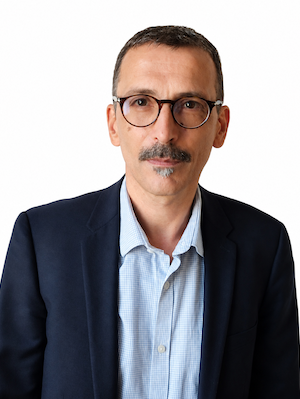
Abdelkader Abderrahmane
Abdelkader Abderrahmane is an Associate at the Pan African Agenda Institute. He is also a consultant and researcher working on peace, security, violent extremism, counter-terrorism, and organized crime in North-West Africa and the Sahel. He has held senior research positions with the Institute for Security Studies (ISS) in Addis Ababa and Dakar and as a Senior Research Fellow at the Atlantic Council, and has served as Adviser to the Upinion NGO and to the African Union's African Centre for the Study and Research on Terrorism (ACSRT).
His research and consultancy work covers a wide range of security and governance issues across North-West Africa and the Sahel, including intelligence services in Morocco, artisanal gold mining, the financing of terrorist groups, sand trafficking in Morocco and Western Sahara, the intersection of terrorism and drug trafficking, and hazardous waste management in Ghana. He has extensive experience advising major international organizations, including the United Nations and the African Union, alongside think tanks and consultancy firms, and is recognized for high-impact, forward-looking geopolitical analysis, strategic insight, and cross-cultural awareness.
Abdelkader holds an MA in International Relations from the University of Durham and a BA in Politics and Geography from the School of Oriental and African Studies (SOAS), University of London. Abdelkader speaks English, Arabic and French.
Abderrahmane's work has been widely published and cited in major international outlets. His writing has appeared in Le Monde, Mail & Guardian, El Watan, Libération, and El Independiente. His analysis is regularly sought by outlets including Le Point, Le Monde, and Scientific American. He is also a frequent commentator on television and radio, including the BBC, Al Jazeera, TRT World, NPO Dutch TV, and Algeria Radio 3.
He is the author of numerous papers, book chapters, and analyses. Selected publications include “Understanding Algeria's Foreign Policy in the Sahel”, in Yahia H. Zoubir (Editor) The Politics of Algeria, London, Routledge (2020); “Mali's Instability and the Limits of External Security: Implications for the Maghreb”, IRIS (co-authored with Yahia Zoubir, 2026); “Algeria's Quiet Rise at the Heart of Mediterranean Geopolitics”, ISPI (co-authored with Yahia Zoubir, 2026); “Morocco's Intelligence Services and the Makhzen Surveillance System”, in Tshepo Gwatiwa (Editor) Contemporary Intelligence in Africa, Routledge (2024); “Hazardous Waste in Ghana: An International Issue”, Institute for Security Studies (2024); “Bordering on Crisis: The Future of Algeria-Mali Relations”, Middle East Council on Global Affairs (co-authored with Yahia Zoubir, 2025); “Extracting and Trafficking Morocco's Coastal Sand”, Institute for Security Studies (2022); “Alger au Sahel: Stabilité et Sécurité”, IFRI (co-authored with Yahia Zoubir, 2022); “Migrants at the Mercy of Morocco's Iron Fist”, Institute for Security Studies (2022); “G5 Sahel: Les Pays Africains Peuvent-Ils Assurer Leur Sécurité?”, OrientXXI (2018); “Constructive Chaos Extends into the Sahel”, OrientXXI (2017); and “The Sahel: A Crossroads Between Criminality and Terrorism”, IFRI (2012).
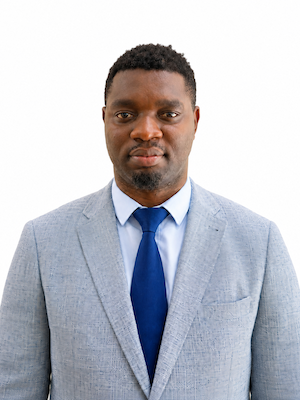
Dr Darlington Tshuma
Dr. Darlington Tshuma is an Associate at the Pan African Agenda Institute, where he serves as co-rapporteur for the DAWA and Geopolitical Africa constituencies, supporting strategic documentation, reporting, and coordination processes. He also contributes to the development of high-level policy proposals on African Union reform, state transformation, and strengthening the primacy of domestic politics in governance systems. In addition, he convenes and coordinates stakeholder meetings, produces analytical reports, and drafts position statements on emerging geopolitical and policy developments in Africa.
His work at PAAI builds on his broader interests as a policy strategist, researcher and development practitioner. His research spans multiple dimensions of governance in Africa, including colonial encounters and international humanitarian law, Europe–Africa digital transformation and governance, migration and human rights, democracy, gender, human security, African development, African nationalism, leadership and contemporary African politics, and Europe–Africa relations more broadly. His work has been featured in several prominent media outlets, including the UN's Africa Renewal, South Africa's Mail & Guardian and Daily Maverick, AffarInternazionali, Africa at LSE, and The Conversation Africa (TCA).
Dr. Tshuma holds a Ph.D from Durban University of Technology (South Africa), and is currently a Research Fellow at the Istituto Affari Internazionali's (IAI) 'Mediterranean, Middle East and Africa' programme and a Think Visegrad Visiting Fellow at the Institute for International Relations (IRR) in Prague.
Previously, he served as Advisor (on secondment by the World Food Programme) to the UN Under-Secretary-General and Special Adviser on Africa at the United Nations Secretariat in New York (2024–2025). From 2025 to 2026, he held an ARUA-Carnegie New York / Mastercard Foundation Early Career Research Fellowship (ECRF), hosted by the Institute for Peace and Security Studies (IPSS) at Addis Ababa University, Ethiopia. He has also held postdoctoral fellowships at the Thabo Mbeki African School of Public and International Affairs (TM School) and at Wits University, both in South Africa, and in 2021 was an inaugural Africa Policy Fellow at the Florence School of Transnational Governance (STG) at the European University Institute in Florence.
Dr. Tshuma is a recipient of several prestigious research grants and fellowships, including “Inherit Fellowship” at Humboldt Universität zu Berlin (Germany), the Think Visegrad Fellowship (Czech Republic), the ARUA-Carnegie New York / Mastercard Foundation ECRF (Ethiopia), the Africa Policy Fellowship (Italy), Canon Collins Ph.D. Scholarship (South Africa), the Young African Leaders Initiative (USAID/Mastercard), and Brightest Young Minds (South Africa).

Massimo Guglietta
Massimo Guglietta is currently an Associate at the Pan African Agenda Institute, where his work bridges research and communications. He examines migration from multiple lenses, such as development, protection, economic impact, and human rights, while also driving PAAI's communications strategy through social media, website, and branding.
His work at PAAI builds on his role at the International Organization for Migration (IOM), supporting regional migration governance across Southern Africa. In this role, Massimo contributes to regional political and migration analysis, maps key stakeholders, and helps shape advocacy strategies that guide IOM's engagement with governments, multilateral partners, civil society and the private sector. While based in Pretoria, South Africa, he supported IOM's Protection Unit by leading capacity-building workshops on trafficking risks, contributing to the development of referral pathways and stronger protection systems, and assisting with protection monitoring and regional coordination across ten Southern African countries.
Massimo solidified his academic foundation in migration governance by earning a Bachelor's degree in Political Science and Italian from Rutgers University, New Brunswick, graduating summa cum laude with High Honors, and later completing a Master of Arts in International Affairs at Johns Hopkins SAIS Europe in Bologna, Italy. His academic work is rooted in the political, economic, and social dimensions of migration, with particular attention to the Mediterranean and African contexts. His undergraduate honors thesis explored how Italy responded to rising Mediterranean arrivals by transitioning between restrictive, humanitarian, and externalized migration policies and the political pressures that shaped those shifts, while his master's thesis examined migration management under Giorgia Meloni's government and evaluated the effectiveness of Italian externalization policies in the Central Mediterranean. His research has also explored themes such as conflict-driven displacement, EU political incentives, free-trade dynamics, and the impact of securitization narratives on humanitarian access. During his graduate studies, Massimo coordinated research trips to Tunisia and Bosnia and Herzegovina, facilitating engagements with local and international organizations focused on democratic development, migration, and humanitarian assistance.
Originally from Bernardsville, New Jersey, USA, Massimo's interest in migration stems from his family’s migration journey from Italy to the United States. Massimo is also a Fulbright Scholar to the Slovak Republic, where he taught English and History while supporting and leading cultural exchange initiatives in 2018-2019. Previously, Massimo worked in media, communications, and digital storytelling, where he gained experience crafting narratives and translating complex ideas into engaging, accessible content. His time in the media sector reinforced his belief in clear, responsible messaging and the importance of well-grounded research in shaping how global issues are understood. He has also written on migration and development for the Osservatorio Balcani e Caucaso Transeuropa (OBCT), covering topics such as labour exploitation, migration management in the Balkans, and human rights challenges facing migrants and refugees. Beyond his academic and professional commitments, Massimo has volunteered with community organizations such as Refugees Welcome Italia, reflecting his dedication to supporting migrants at the local level.

Enoch Randy Atkins
Enoch Randy Aikins is an Associate and Member of the PAAI editorial board. He is a development economist with over 8 years of experience working with think tanks on long-term development prospects of African countries. He has led over 10 research projects for development partners such as UNDP, IDRC, the Netherlands Ministry of Foreign Affairs, Hanns Seidel Foundation, and AUDA-NEPAD. Just recently, he served as a researcher with the African Futures and Innovation Programme at the Institute for Security Studies in Pretoria, where he produced over 20 studies on the future of more than 15 African countries, including work on economic transformation, governance, education, trade, demographics, infrastructure, financial flows, and regional integration.
Enoch served as the Lead Researcher for the UNDP Sudan Special Report, which assessed the economic and development costs of the conflict in Sudan and explored alternative pathways towards recovery, growth, and long-term development. He also served as the Lead Researcher for the Mali country study under UNDP Africa’s Report on enhancing development planning and decision-making to prevent coups in Africa as part of the Africa Facility to Support Inclusive Transitions (AFSIT).
Before joining ISS, Enoch worked with the Institute for Democratic Governance in Ghana, where he contributed to initiatives on constitutional reform, democratic devolution, credible elections, local governance, and the development of political parties. His work helped convene policymakers, civil society actors, and political stakeholders around reforms aimed at strengthening democratic governance and institutional accountability. He also previously served as a research assistant at the Institute for Statistical Social and Economic Research at the University of Ghana.
Enoch has an extensive publication record, with more than 60 outputs spanning peer-reviewed journal articles, policy briefs, country and regional reports, book contributions, blogs, and media commentary. His analysis has appeared on platforms such as ISS Today, African Tomorrow, Premium Times, Daily Maverick, Routledge, and in academic journals, and he is a regular contributor to public debates on African economies, democracy, governance, elections, peace, and security. He has 50+ interviews across print, digital, and broadcast platforms and his commentary has garnered more than 700,000 views across media outlets, including the BBC, DW, Financial Times, SBS Dateline, Mining Weekly, Radio Islam, Daily Graphic and other international and African media platforms.
He is the co-founder of Enterprise Bridge Africa (EBA), an initiative that connects graduates to support the growth of informal enterprises in Africa. He is also the founder of Young Africans in Policy and Advocacy (YAPA), an initiative that supports young Africans interested in policy, advocacy, and public leadership through programs like RISE Africa and DataHub Africa. Enoch's research interests include political economy and institutions, long-term development prospects, systems thinking and diagnosis, informal economies and graduate unemployment, and ethical leadership.
He holds a master’s in public administration at the Harvard Kennedy School, where he served as an Edward S. Mason Fellow in Public Policy and Management and a Ford Foundation Mason Program Scholar in Democracy at the Ash Centre for Democratic Governance and Innovation. He also holds an MPhil in Economics and a BA in Economics with Mathematics from the University of Ghana and was a 2023 Young African Leadership Fellow at the European University Institute in Florence.